
Keaveny, R (2020) Revolve, example of Digital Image made using the Colour Touch App, Birr, Offaly, Ireland: Private Collection.
Please note, the # followed by a number contained within brackets, refers to the survey respondents allocated number, with each being identified by a number rather than name, ensuring anonymity.
Abstract
In 2016, as a training art therapist, I surveyed IACAT members about their experience of using digital technology within their practice and received three responses.
Fast forward to April 2020 and wondering how the Covid-19 crisis was impacting creative arts therapists in Ireland, I decided to survey the membership again. As well as their experiences of digital resources, I also wanted to establish a clear picture of how many had moved their practice online and the reasons that may have informed those decisions.
INTRODUCTION
Between April and June 2020, I asked a series of ten questions covering specific areas of practice including; clinical practice delivery during Covid-19, training, digital confidence and utilising online therapy. There were seventy survey respondents from across five modalities. With the option to expand on an answer built into each question, an additional two hundred and seventy-three written answers were contributed. This article explores and expands on the themes raised by the respondents, including the ethics of digital practice, digital competency, implications for trainings and further considers the future of creative arts therapies in Ireland.
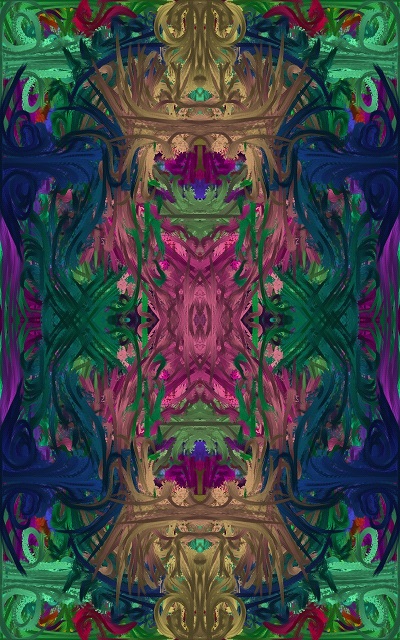
Keaveny R (2020) Mirror, example of Digital Image made using the Finger Paint Magic app, Birr, Offaly, Ireland: Private Collection.
MAIN BODY
The disconnect between digitally literate clients and creative arts therapies is a reality long acknowledged within the literature, (Carlton, 2015; Orr, 2011) with creative arts therapists identified as having, ‘Little experience and skills in facilitating the use of digital arts in therapy.’ (Choe cited in Garner 2017:p.54). Correspondingly, not feeling sufficiently trained in digital and/ or online practice was a predominant concern identified by respondents, observing, for instance that, “We have all found ourselves at a loss to know how to practice safely if at all, we need to be educated properly to provide best practice for ourselves and clients.” (#54) Given the lack of training in regard to digital practice across all modalities, it is perhaps not surprising that 98% of respondents, when asked in question seven, “Do you think that future training creative arts therapists should receive online therapy training accompanied by additional training in arising ethical and confidentiality issues?” answered, that future creative art therapists should receive training in online therapy, and they observed the arising implications for practice should digital competency training not be implemented.
It’s also interesting to note that in order to undertake online practice during Covid-19, 50.72% of respondents undertook additional training. One participant observed:- “I think it would be prudent as I fear that this crisis will not be over for some time; the world is a changed place, and technology will be at the forefront of human connection going forward.” (#60) Carlton (2019) argues that teaching digital literacy to training students is a social and professional responsibility rather than a choice. The respondents also reported this sense of responsibility, given issues the layers of complexity inherent to digital practice, system of delivery, storage of clinical work, informed consent, ethical social media use, digital literacy, and professionalism.
It is also important to acknowledge that there has been a substantial financial impact of Covid-19 on the income of creative arts therapists with the largest group, 54.41% responding that 75-100% of their income had been impacted. In total 70.59% have had 50% of their income affected, while 22.06% have experienced a lesser drop of 0-25%. Lack of income was cited by some respondents as being a factor in why they were not in a position to undertake online training, for example, “My reason as to answering no for this question is because my income is significantly reduced as I have very little work and so my living expenses are my first priority.” (#40) Given the often non-contracted and sessional nature of creative arts therapies work, it is not surprising but still shocking that incomes have been so significantly impacted and it will be important to monitor how soon or whether they return to pre-Covid-19 levels.
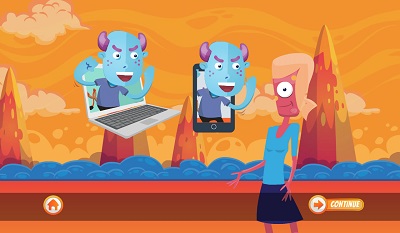
Keaveny R (2020) Cyber Bullying, example of a Digital Image from Kloog 2, social skills app, Birr, Offaly, Ireland: Private Collection.
While the concerns identified are valid, particularly in the context of an emerging field of practice, it seems counter intuitive that when as therapists we learn, experiment and educate ourselves about the different properties of wide variety of materials and methodologies, that when a new media emerges and has transformed the ways in which we communicate that as a profession we wouldn’t also explore it. Indeed some respondents reported their surprise at what they expressed as being unexpected benefits of working in an online context, “I was very concerned initially as I imagined that it would in no way compare to face to face sessions. I am very glad that I embraced it as it provided a necessary support to a small portion of clients that I work with and I would be open to continuing with this platform should the need arise.” (#61) With the element of choice greatly altered in relation to digital practice, respondents reported that had the Covid-19 situation not occurred, they would not have considered delivering online therapy. For some it opened them up to possibilities afforded by digital practice, while for others it confirmed their belief that it is not suitable for them or their clients.
A small but significant number of respondents, approximately ten per cent, identified environmental concerns as reason for engaging in online therapy, which I haven’t seen evident in creative arts literature. For instance, “It's better for the environment as it reduces traffic on the roads.” (#15) and “These emergency situations are going to become more regular as we move into climate change. More services will be offered online to cut down on travel and rental of spaces.” Environments if referred to at all in the literature, tend to be both immersive and digital, for example, ‘In the clinical space, digitally enhanced environments may become more readily available to offer art therapy clients opportunities to explore emotions, sense of self.”- (Brown & Garner 2016,: p.189) Within this area, quality of life was a further reason outlined by survey respondents as a reason for digital adoption, “I will continue offering online spaces and I wish, in fact, to extend my practice this way, as I eventually would like to move to the countryside and do not wish to commute” (#30).
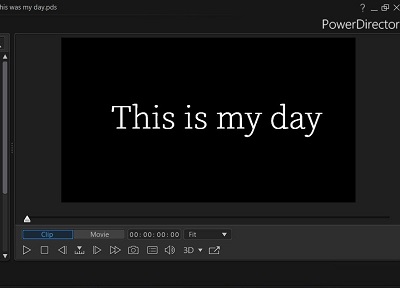
Client Image (2020) This is My Day, digital still from collaborative short film, Birr, Offaly, Ireland Private Collection.
While the majority of respondents commented that they found face to face therapy to be the most ethical and effective method of therapeutic engagement, 59.30 % felt that it should be utilised, with the most common reasons given that; it offers flexibility to both client and therapist; is a useful option for those who can’t attend physically; is being driven by client demand; online platform can itself become a medium that brings a new dimension to the creative space and provides a useful learning opportunity. As the field expands, I think the need to position oneself as being either, ‘for’ or ‘against’ digital practice will reduce and as indicated by my research findings become another option in the vast array of therapeutic tools especially when the development of digital practice is largely client driven.
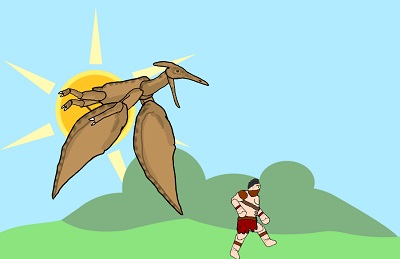
Client Image (2020) Run, digital still from collaborative animation made using the 'Drawing Cartoons 2 App, Birr, Offaly, Ireland: Private Collection.
CONCLUSION
The issues presented through the findings of this survey are only a glimpse into an emerging practice in Ireland but following the rupture in traditional practices and situationally hastened digital adoption, it is clear that creative arts therapies in Ireland have been given a once in a generation opportunity to consider the road down which they want to travel. Albeit through the lens of the digital platform, that at times challenged, stretched, excited, exasperated, surprised and infuriated Creative Arts Therapists during the Covid- 19 crisis.
ln a 2007 special edition of, Art Therapy; The Journal of American Art Therapy Association dedicated to exploring the emerging role of technology the Creative Arts Therapies, Dr Lynn Kapitan asked, ‘Will Art Therapy Cross the Digital Culture Divide?’ She explored art therapies relationship with technology, the growing demand for interaction with it but also identified the absence of both training and literature as distinctly lacking. These themes are still relevant today and were also present in my findings thirteen years later. This research contributes to the growing debates surrounding digital practice and also exploring what informs digital adoption. It may have taken a global pandemic to induce it, but it can be argued that creative arts therapies in Ireland have indeed crossed the digital divide. However, the question remains, will it stay there and if so in what capacity?
Rowena Keaveny MA Ath MIACAT ACTO
This article was originally published in Polyphony (June 2020)
http://polyphony.iacat.me/words/crossing-the-digital-divide-creative-arts-therapy-practice-in-ireland-during-covid-19
References
Austin D, B (2009) Renewing the Debate: Digital Technology in Art Therapy and the Creative Process. Art Therapy: The Journal of the American Art Therapy Association, 26(2), 83-85.
Carlton N (2014) Digital Culture and Art Therapy, The Arts in Psychotherapy, Vol 41, 41-45.
Carlton N (2018) Digital Media Inclusion in Art Therapy Coursework in Malchiodi C, (Ed) Art Therapy and Digital Technology, Jessica Kingsley Publishers, 373-393.
Choe N (2017) Utilizing Digital Tools and Apps in Art Therapy Sessions in Garner R (Ed),
Digital Art Therapy, Materials, Methods and Applications, Jessica Kingsley Publishers, 54-66.
Kapitan L (2007) Will Art Therapy Cross the Digital Culture Divide? Art Therapy: The Journal of the American Art Therapy Association, Vol 24, 50-51.
Klorer (2009) The Effects of Technological Overload on Children, The Journal of The American Art Therapy Association, V2 N2, 80-82.
Orr P (2012) Technology Use in Art Therapy Practice: 2004 and 2011 Comparison, The Arts in Psychotherapy, 39(4):234–238.
Potash J S (2011) Fast Food Art, Talk Show Therapy: The Impact of Mass Media on Adolescent Art Therapy, Special Issue on Art Therapy's Response to Techno-Digital Culture, Issue 2: Volume 26, 52-57.
Bio
Rowena is an artist and art therapist based in Ireland. Her work uses digital media, photography, animation and socially engaged practice to explore the diverse issues surrounding social inclusion, disability and access to cultural participation experienced by marginalised groups.
As an Art Therapist Rowena has a special research interest in and focus on the use of digital practices and online therapy. She also works with film making through digital narrative to facilitate an understanding of individual experience and, its impact and as a tool to aid self-discovery and recovery.